How many days are needed to visit the Sahara?
7/3/2026
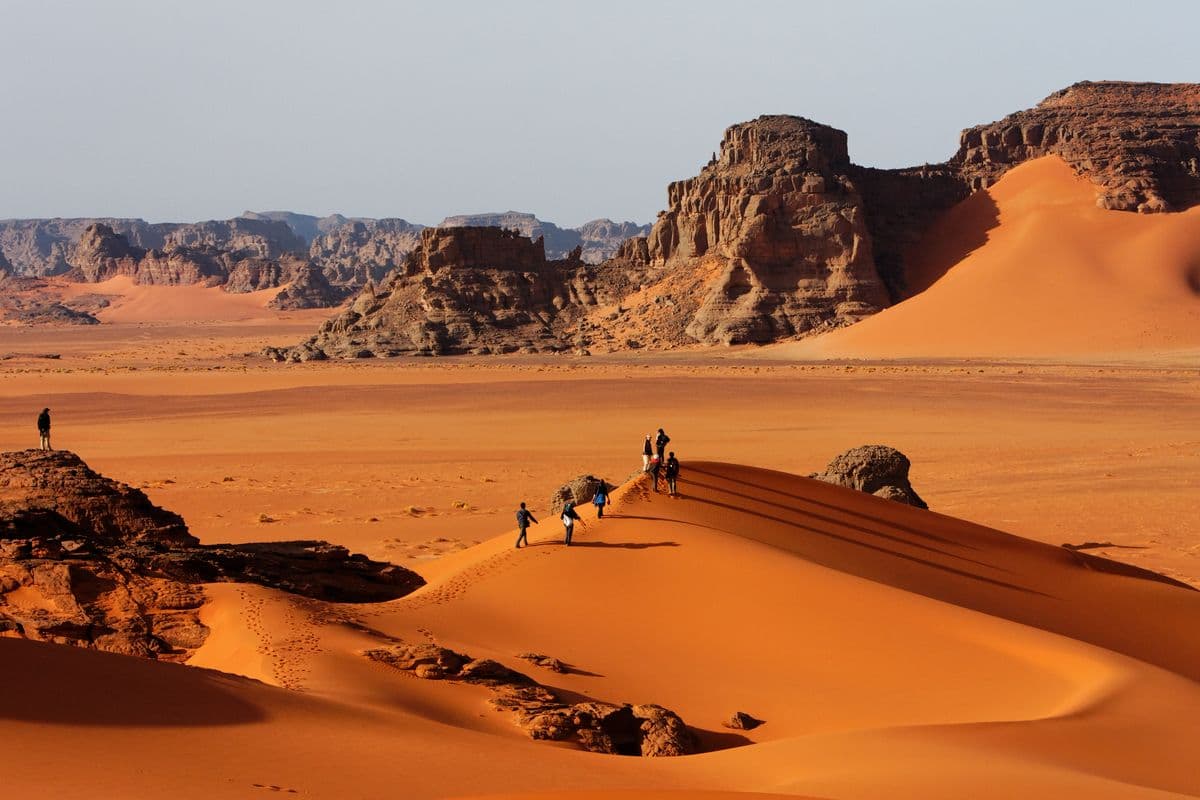
The Algerian Sahara is a world of its own—a fascinating vastness that cannot be summed up in a simple drive-through. Many travelers wonder what the ideal time is to soak up the desert's magic without rushing. Here are our recommendations.
Key points to remember
The Sahara needs time to adapt to its slow pace.
The ideal duration depends on your destination (Tassili or Hoggar).
Logistics are key to appreciating the desert silence.
Avoid "flash" tourism to respect the Sahara's ecosystem.
1. The Short Trip: 3 to 4 days
If you are on a tight schedule, 3 to 4 days will allow you to discover the "gates" of the desert (around Djanet or Tamanrasset). This is enough for an initial immersion, one night camping under the stars, and visiting a few major archaeological sites.
2. The Recommended Immersion: 7 days
One week is the perfect duration for a Saharan trip. It allows you to move far from urban areas, traverse varied landscapes (dunes, canyons), and fully immerse yourself in nomad culture. It is the ideal pace to disconnect from daily stress.
3. The In-Depth Adventure: 10 days or more
For trekking enthusiasts or history buffs (rock art), 10+ days are necessary. This allows you to explore remote areas of Tassili n'Ajjer or cross entire massifs, taking time to walk and engage with local guides.
💡 Practical Info: Plan Your Desert Trip
Location: Southern Algeria (Djanet, Tamanrasset, Taghit).
How to get there: Domestic flights from Algiers or long-distance car travel.
Recommended duration: 7 days for a perfect balance.
Price (approximate): Approx. 40,000 to 80,000 DZD per week (guide, 4x4, food included).
"The desert is not visited, it is felt. The longer you stay, the more the silence tells its story."
Conclusion
The Sahara requires patience. While 4 days are a good start, 7 days offer the perfect balance between adventure and rest.
FAQ
When is the best time?
October to April, to avoid extreme heat.
Can I go alone?
No, a local guide is mandatory for your safety and to respect protected zones.
About the Author